
If a chicken in your flock is sneezing, limping, or just not acting right, one of the first questions worth answering is whether you’re dealing with a bacterial infection or something else entirely. Bacterial diseases behave differently than viral ones — they usually respond to antibiotics, but “responding to treatment” and “being cured” aren’t always the same thing. This guide walks through what bacterial chicken diseases actually are, how they compare to viral disease, which ones show up most often in backyard flocks, and why treatment decisions get complicated fast once you understand how these infections behave over time.
What Makes a Chicken Disease “Bacterial”?
A bacterial chicken disease is caused by a living bacterium invading the bird’s tissue — as opposed to a virus, a parasite, or a fungus. That distinction matters practically: bacterial infections are the ones antibiotics can act on, while viral infections generally aren’t affected by them at all.
One wrinkle worth knowing up front: Mycoplasma, the organism behind chronic respiratory disease, is technically not a true bacterium. It lacks a cell wall and sits in its own category biologically. But it’s grouped with bacterial diseases by convention in poultry medicine because it behaves similarly — it responds to certain antibiotics and follows the same general disease pattern — so you’ll see it listed alongside true bacterial infections everywhere, including here.
Bacterial vs. Viral Chicken Diseases: Key Differences
The practical differences between bacterial and viral disease in chickens come down to four things: whether antibiotics help, whether a vaccine can actually prevent infection, whether recovered birds keep carrying the disease, and how fast an outbreak typically moves through a flock.
Bacterial diseases usually respond to antibiotics, at least in terms of reducing symptoms. Viral diseases don’t respond to antibiotics at all — there’s no direct treatment once a bird is infected, only supportive care. Vaccines exist for both categories, but they serve different purposes: bacterial vaccines (where they exist) tend to reduce the severity of disease rather than block infection outright, while many viral vaccines genuinely prevent the bird from getting sick in the first place. And critically, bacterial infections are far more likely to leave a bird as a lifelong carrier — still capable of shedding the organism — even after it looks completely healthy.
| Feature | Bacterial Diseases | Viral Diseases |
|---|---|---|
| Treatable with antibiotics? | Yes, symptoms often improve | No, antibiotics have no effect |
| Vaccine purpose | Usually reduces severity, not infection | Often prevents infection outright |
| Carrier state common? | Yes, frequently lifelong | Less common, varies by disease |
| Typical spread speed | Moderate, often via contact or contaminated feed/water | Can be very fast, especially airborne strains |
| Example diseases | Fowl cholera, colibacillosis, mycoplasmosis | Infectious bronchitis, Newcastle disease, Marek’s disease |
Most Common Bacterial Diseases in Chickens (Comparison Chart)
Backyard flocks tend to run into the same handful of bacterial diseases over and over, even though the exact symptoms and severity vary by bird, age, and living conditions. The table below covers the ones you’re most likely to encounter, along with how contagious each one is, whether it poses any risk to humans, and whether antibiotics actually resolve it or just manage it. Each of these has enough depth to warrant its own dedicated guide — this table is meant to help you identify which one you might be dealing with, not replace a full diagnostic workup.
| Disease | Causative Bacterium | Primary Symptoms | Contagious? | Zoonotic Risk | Antibiotic-Responsive? | Curable or Carrier Risk |
|---|---|---|---|---|---|---|
| Fowl Cholera | Pasteurella multocida | Sudden death, swollen wattles/joints, greenish diarrhea | Yes, highly | No | Yes | Survivors often become carriers |
| Infectious Coryza | Avibacterium paragallinarum | Facial swelling, nasal discharge, swollen sinuses | Yes | No | Yes | Chronic carriers common |
| Colibacillosis | E. coli | Respiratory distress, lethargy, reduced egg production | Yes, moderate | Limited | Yes | Often secondary to other stressors |
| Mycoplasmosis (CRD) | Mycoplasma gallisepticum | Sneezing, nasal discharge, swollen sinuses, reduced egg output | Yes, highly | No | Yes | Lifelong carrier is typical |
| Salmonellosis (Paratyphoid) | Salmonella species | Diarrhea, lethargy, poor growth in chicks | Yes | Yes | Yes | Carrier state common |
| Fowl Typhoid | Salmonella gallinarum | Sudden death, pale comb, yellow-green diarrhea | Yes | No | Yes | Regulatory reporting often required |
| Pullorum Disease | Salmonella pullorum | High chick mortality, white pasty diarrhea | Yes, especially in chicks | No | Yes | Regulatory reporting often required |
| Necrotic Enteritis | Clostridium perfringens | Sudden death, depression, dark/bloody droppings | Yes, moderate | No | Yes | Recurs easily if gut health isn’t addressed |
How Bacterial Chicken Diseases Spread
Most bacterial infections in chickens travel through fairly ordinary routes: direct contact between birds, contaminated water or feed, airborne dust and dander in coops with poor ventilation, and shared equipment like feeders or waterers that aren’t cleaned between uses. Some bacteria can also pass through the egg from an infected hen to her chicks, which is part of why hatchery-sourced birds matter so much for disease control. Wild birds, rodents, and insects can act as carriers too, introducing bacteria into a flock that otherwise has no contact with outside chickens. None of these routes are unique to bacterial disease — viral pathogens spread the same ways — which is exactly why symptoms alone often aren’t enough to tell the two apart.
Symptoms That Suggest a Bacterial Infection
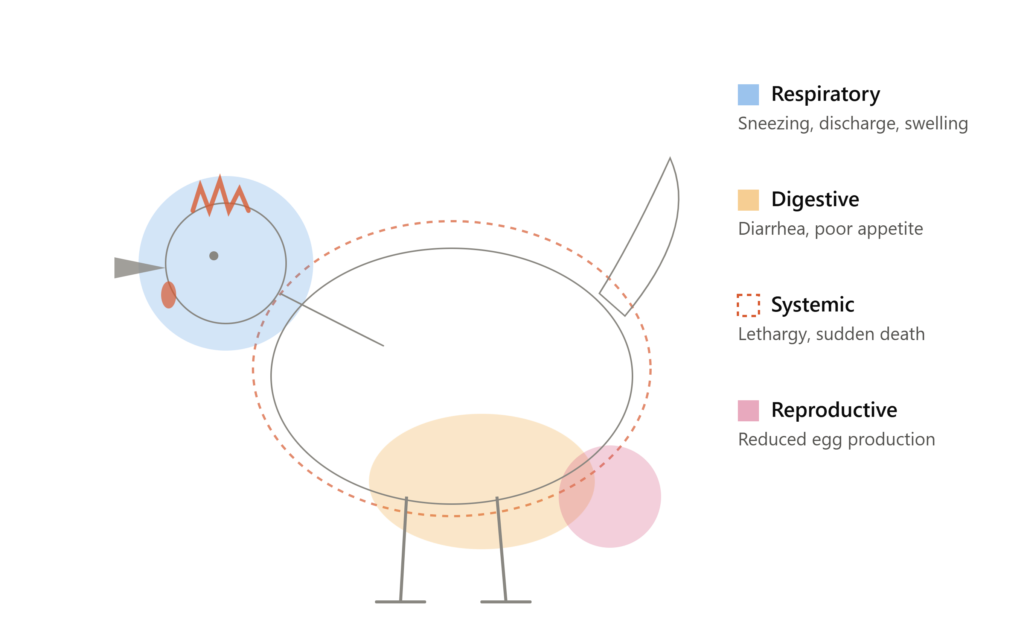
Bacterial infections tend to show up in a few recognizable clusters. Respiratory symptoms include sneezing, nasal or eye discharge, and facial or sinus swelling. Digestive symptoms usually mean diarrhea, often white, green, or watery in color, sometimes paired with reduced appetite. Systemic infections can present as sudden death, lethargy, or a pale comb with little warning beforehand. And reproductive symptoms — most often a drop in egg production or inflammation of the reproductive tract — show up in hens dealing with certain bacterial infections even when other symptoms are mild.
It’s worth being honest about the limits of symptom-spotting here: these signs overlap heavily with viral disease, nutritional deficiencies, and parasitic infection. A sneezing bird could have mycoplasmosis, infectious bronchitis, or simply dust irritation. Getting a real answer, especially for a valuable bird or a repeated flock problem, usually means a vet visit and lab testing rather than guessing from a symptom list.
Why Antibiotics Help Symptoms But Rarely Cure the Flock
Antibiotics can reduce clinical signs and lower the death rate during a bacterial outbreak, but for most poultry pathogens, they don’t fully clear the bacteria from an infected bird’s system. A chicken can look completely recovered — eating, drinking, laying normally — while still carrying and shedding the organism that made it sick in the first place.
That gap between “recovered” and “cleared” is what makes bacterial disease management harder than it first appears. Once you know a flock has an asymptomatic carrier in it, you’re left choosing between a few imperfect options: cull and disinfect to start clean, accept that the flock will always test positive and manage exposure accordingly, or vaccinate new birds going forward to blunt symptoms even though the vaccine won’t stop infection outright. None of these are quick fixes, and the right call usually depends on whether you’re keeping a small backyard flock for eggs and companionship or trying to maintain a disease-free breeding operation.
Antimicrobial Resistance: Why Some Bacterial Chicken Diseases Are Getting Harder to Treat
Antibiotic resistance isn’t just a human medicine problem — it’s showing up in poultry bacteria too, and it’s making some infections harder to treat than they were a decade ago. Recent surveillance of bacteria isolated from chickens has found tetracycline resistance in roughly 44% to 69% of tested Campylobacter samples, and some E. coli and Staphylococcus strains recovered from poultry show resistance to more than half of the antibiotics commonly used against them.
For a backyard keeper, this has a practical implication: reaching for whatever antibiotic is available, without a diagnosis or vet guidance, is exactly the kind of use that drives resistance further. A vet-guided choice — ideally based on which bacterium is actually involved — is more likely to work and less likely to make future infections harder to treat, both in your flock and more broadly. This isn’t a reason to panic about any single sick bird, but it is a good reason to treat antibiotic use as something to get right rather than something to guess at.
Zoonotic Risk — Can Bacterial Chicken Diseases Spread to Humans?
A couple of them, yes. Salmonella and Campylobacter are the two bacterial poultry pathogens with real zoonotic significance — people who handle infected birds, their droppings, or contaminated eggs without washing their hands can pick up either one. Basic hygiene (handwashing after handling chickens or eggs, and avoiding raw eggs from flocks with an unknown health status) covers most of the practical risk. Most other bacterial chicken diseases on this list, including fowl cholera, infectious coryza, and mycoplasmosis, aren’t known to transmit to humans. For a full breakdown of zoonotic risk across poultry diseases, including how serious each one actually is and what precautions matter most, see our dedicated guide on zoonotic diseases in chickens.
Regulatory and Reportable Bacterial Diseases
A couple of diseases on this list carry more than just flock-health consequences. Pullorum disease and fowl typhoid are significant enough, from a public-health and industry standpoint, that state veterinary authorities can get involved once a flock tests positive — in some cases requiring depopulation rather than ongoing management. This is part of why the National Poultry Improvement Plan (NPIP) exists: buying chicks or hatching eggs from an NPIP-certified, Pullorum-Typhoid-clean source is the most effective way to avoid ever facing that situation in the first place.
Prevention: Reducing Bacterial Disease Risk in Your Flock
Most bacterial disease prevention in backyard flocks comes down to a handful of consistent habits rather than any single fix. Quarantine new birds for at least 30 days before introducing them to your existing flock — this window is long enough for most bacterial incubation periods to show symptoms if a new bird is carrying something. Keep feeders and waterers clean and free of standing contamination, since many bacteria spread through fecal-contaminated water and feed. Make sure the coop has adequate ventilation to cut down on airborne dust and ammonia buildup, both of which make respiratory infections more likely to take hold. And when you’re adding new stock, buying from NPIP-certified sources removes a meaningful amount of risk before it ever reaches your property.
FAQ
What bacterial diseases affect chickens? The most common are fowl cholera, infectious coryza, colibacillosis (E. coli), mycoplasmosis (chronic respiratory disease), salmonellosis, fowl typhoid, pullorum disease, and necrotic enteritis. Most cause respiratory or digestive symptoms and are treatable with antibiotics, though not always curable.
Which chicken diseases are caused by bacteria? Diseases with a confirmed bacterial cause include colibacillosis (E. coli), fowl cholera (Pasteurella multocida), infectious coryza (Avibacterium paragallinarum), salmonellosis and fowl typhoid (Salmonella species), and necrotic enteritis (Clostridium perfringens). Mycoplasma-caused diseases like chronic respiratory disease are often grouped here too, though Mycoplasma is technically not a true bacterium.
How do bacterial chicken diseases spread compared to viral ones? Bacterial diseases typically spread through contaminated water, feed, dust, direct contact, and sometimes through the egg, similar to many viral diseases. The key difference isn’t the spread mechanism but the outcome: bacterial infections often respond to antibiotics and frequently leave survivors as lifelong carriers, while viral infections usually have no direct treatment and spread can only be managed through vaccination and biosecurity.
Can bacterial chicken diseases be cured with antibiotics? Antibiotics can reduce symptoms and lower mortality, but they rarely eliminate the bacteria completely from an infected bird. Many recovered chickens become asymptomatic carriers that can still spread the disease, which is why “treatment” and “cure” mean different things for most bacterial poultry infections.
What is the most common bacterial disease in backyard chickens? Mycoplasmosis (chronic respiratory disease) and infectious coryza are among the most frequently reported bacterial diseases in backyard flocks, largely because they spread easily through contact and contaminated dust and often become chronic once introduced.
Are bacterial chicken diseases contagious to humans? Some are. Salmonella and Campylobacter, both bacterial, are the two most significant zoonotic risks from backyard chickens and can cause illness in people who handle infected birds or eggs without proper hygiene. Most other bacterial poultry diseases are not known to transmit to humans.
Is antibiotic resistance a problem in bacterial chicken diseases? Yes, and it’s a growing one. Recent surveillance of poultry-associated bacteria has found resistance to common antibiotics like tetracycline in a large share of tested Campylobacter and E. coli isolates, which is one reason veterinary guidance on antibiotic choice matters more than ever for backyard flocks.
Do vaccines exist for bacterial chicken diseases? Vaccines exist for some bacterial diseases, including fowl cholera and certain Salmonella serotypes, but they typically reduce the severity of symptoms rather than prevent infection outright — different from how vaccines work against most viral poultry diseases.